
Boiler Tube Failure Analysis
Boiler tubes are critical components in petrochemical facilities and power plants, operating under extreme heat, pressure, and chemistry. We combine water chemistry, metallurgical expertise, advanced laboratory testing, and field experience to pinpoint the root cause and extend asset life. Our laboratory is in Stafford, Texas, serving Greater Houston, and we accept samples shipped from anywhere.
Laboratory
Waterside · Fireside
Corrosion · Creep · Fatigue
Power & petrochemical
Boiler tube failure analysis pinpoints why a tube failed by combining water chemistry, operating history, and microstructure, so the corrective action fixes the real cause instead of the symptom and prevents repeat failures.
Why boiler tubes fail
Boiler tubes are critical components in petrochemical facilities and power plants, and they operate under some of the harshest conditions in the plant. Identifying why a tube failed requires more than a fracture surface: it demands an understanding of water chemistry, operating history, and microstructure together. Our investigations bring all three to bear so the corrective action addresses the real cause rather than the symptom.
Common failure mechanisms
Corrosion-related failures
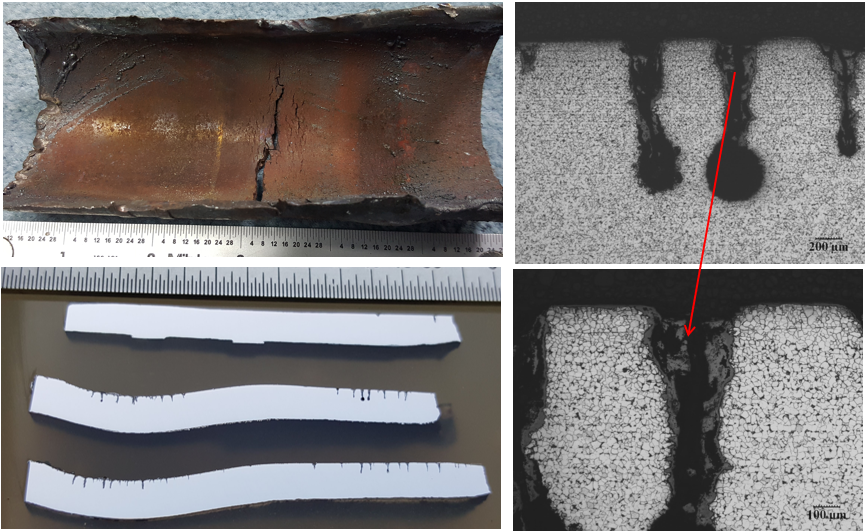
On the waterside (internal) we look for oxygen pitting, acid attack, caustic gouging, and hydrogen damage. On the fireside (external), the culprits are typically sulfidation, chloride-induced corrosion, and low-temperature dew-point corrosion.
Erosion and erosion-corrosion
- Fly ash erosion in coal-fired units
- Steam or water impingement in high-velocity regions
- Erosion-corrosion driven by turbulent flow
Stress corrosion cracking (SCC)
- Chloride SCC in austenitic stainless-steel tubes
- Caustic SCC in boiler water circuits
Overheating and creep damage
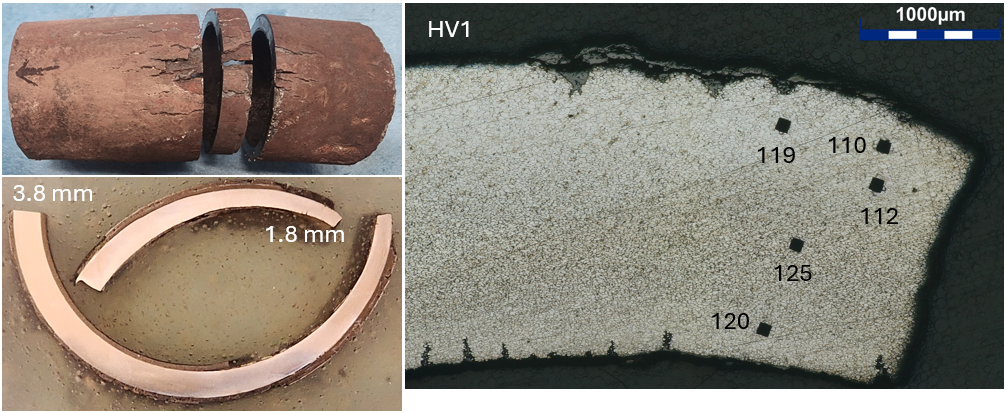
Prolonged or localized overheating produces microstructural degradation, creep voids, and grain-boundary damage, and can lead to tube swelling, bulging, or outright rupture at hot spots.
Fatigue and mechanical failures
- Thermal fatigue from startup and shutdown cycles
- Vibration-induced fatigue
- Dents, gouges, or improper installation damage
Operational and maintenance issues
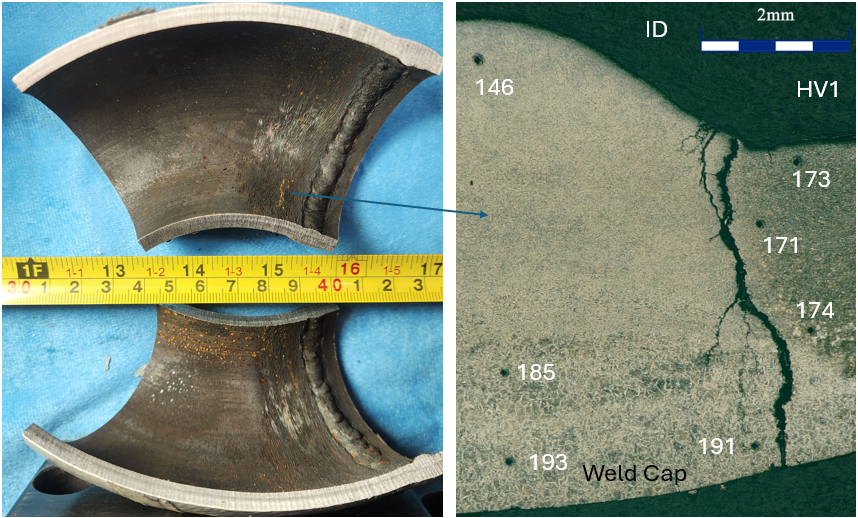
Many failures trace back to poor water chemistry, scaling and deposits, improper startup/shutdown procedures, inadequate cleaning, or weld defects, issues that are correctable once identified.
How we investigate
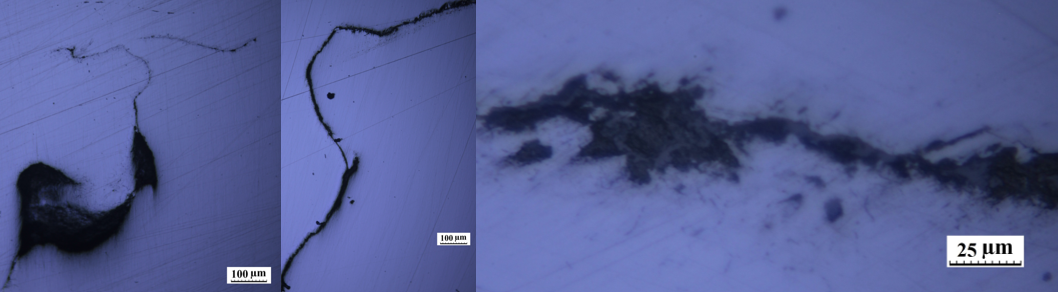
Each failed section is examined with metallography, chemical and deposit analysis, and hardness testing, correlated against the unit's water chemistry and operating record. Documented case histories across multiple material types and mechanisms inform every diagnosis and the recommendations that follow.
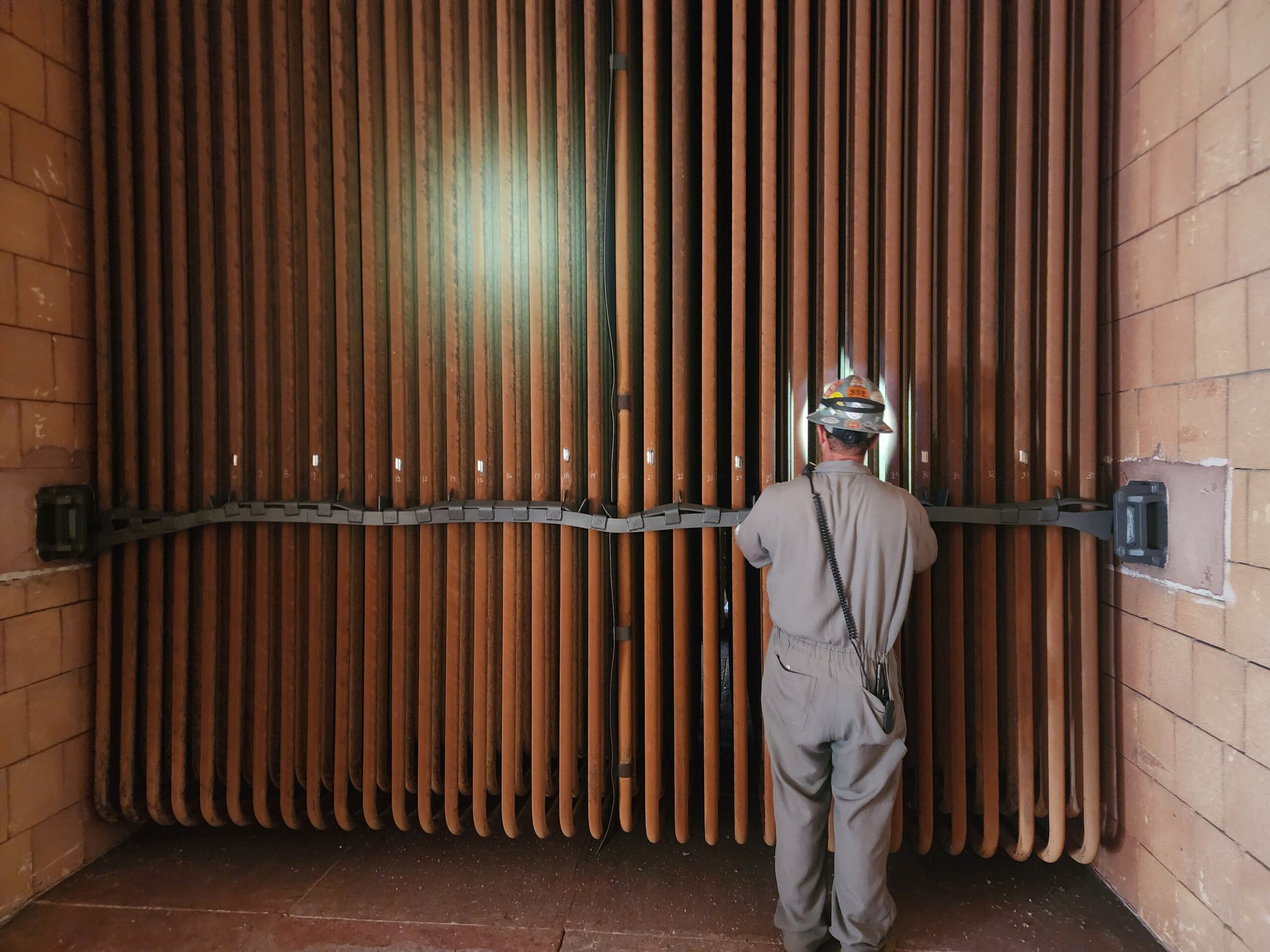
Boiler tube analysis
Overheat, creep, and corrosion damage in boiler tubing.
Often ordered together
Failure Analysis
Root-cause investigation methodology applied across components and industries.
View serviceMetallographic Examination
Microstructural evidence of overheating, creep, and corrosion damage.
View serviceCorrosion Analysis
Characterization of waterside and fireside corrosion and deposit chemistry.
View serviceFrequently asked questions
Why does identifying the failure mode matter?
The failure mode dictates the fix. Oxygen pitting points to deaeration and treatment; creep points to metal temperature and design margin. Correctly separating waterside from fireside causes is the difference between a lasting repair and a repeat failure.
What waterside and fireside mechanisms do you look for?
Waterside (internal): oxygen pitting, acid attack, caustic gouging, and hydrogen damage. Fireside (external): sulfidation, chloride-induced corrosion, and low-temperature dew-point corrosion.
What other failure mechanisms do you evaluate?
Erosion and erosion-corrosion, chloride and caustic stress corrosion cracking, overheating and creep damage such as creep voids, bulging, and rupture, thermal and vibration fatigue, and mechanical or installation damage.
How do you investigate a failed tube?
Each section is examined with metallography, chemical and deposit analysis, and hardness testing, correlated against the unit's water chemistry and operating record.
Can boiler tube failures be prevented once diagnosed?
Often yes. Many failures trace to correctable issues such as water chemistry, scaling and deposits, startup and shutdown procedures, cleaning, or weld defects, which can be addressed once identified.
Lost a boiler tube?
Send us the failed section along with the water chemistry and operating history. Our metallurgists will identify the mechanism and deliver a defensible root-cause report with corrective actions.