
Wear Debris Analysis
A powerful tool for monitoring the health of machinery and preventing catastrophic failures, examining the microscopic particles carried in system fluids and lubricants to catch the early signs of wear, contamination, or material degradation. Our laboratory is in Stafford, Texas, serving Greater Houston, and we accept samples shipped from anywhere.
Laboratory
Fluids & lubricants
SEM-EDS · optical · morphology
Wear type, source & severity
Wear debris analysis reads the microscopic particles carried in a machine's fluids and lubricants to catch wear, contamination, or material degradation early, turning an unplanned breakdown into a scheduled maintenance action.
Reading the particles a machine leaves behind
Wear debris analysis is a powerful tool for monitoring the health of machinery and preventing catastrophic failures. By examining the microscopic particles suspended in system fluids and lubricants, we identify the early signs of wear, contamination, or material degradation, often long before they show up as a performance problem.
What we determine
The analysis establishes whether debris originates from normal operation, abnormal wear, or an active failure mechanism such as fatigue, corrosion, or adhesion. The goal is to pin down the wear type, source, and severity so you can take proactive measures that extend equipment lifespan.
Analytical techniques
We combine several complementary methods to characterize each particle population:
- Scanning Electron Microscopy (SEM) with EDS elemental analysis
- Optical microscopy for particle imaging and counting
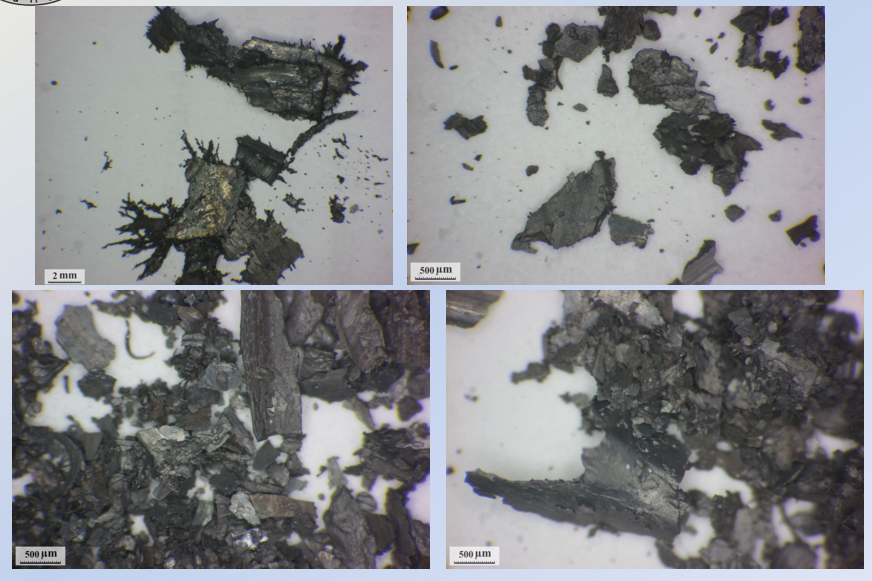
- Particle morphology assessment to link shape to wear mode
Case studies
Polystyrene extruder
Metal debris carrying elevated chromium and molybdenum levels indicated wear from multiple sources, most likely severe abrasion between a nitrided 4140 screw and hard contaminants or additives in the polymer.
Multi-component debris
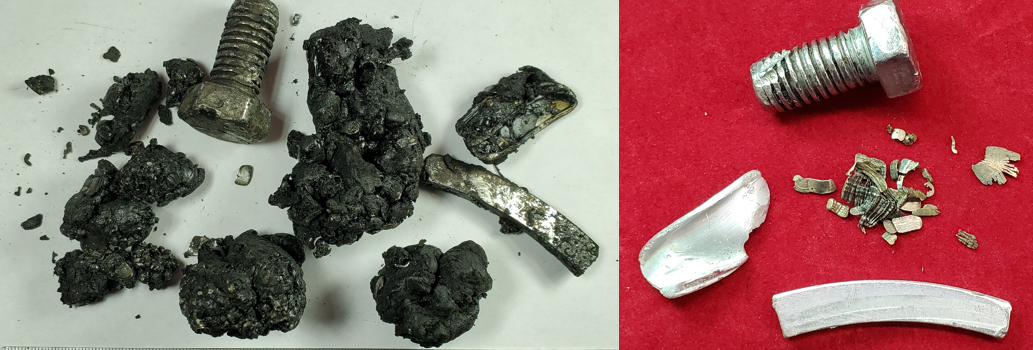
A single sample was resolved into debris from several distinct system components (high-strength carbon-steel bolts, 6063-type aluminum alloy, stainless-steel retainer rings, and X52/X60-grade steel pipe), allowing each wear source to be traced back to its origin.
Wear debris analysis
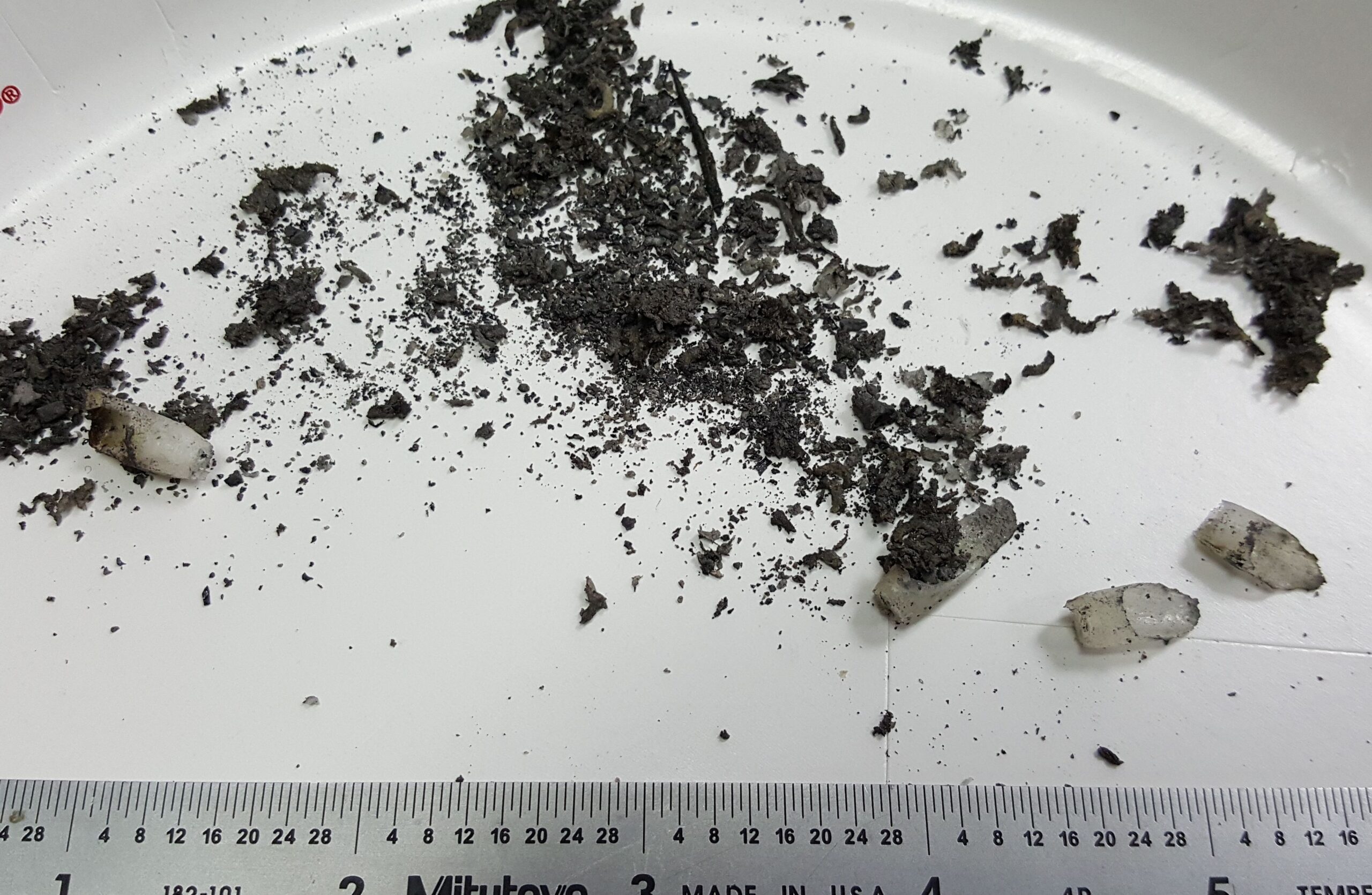
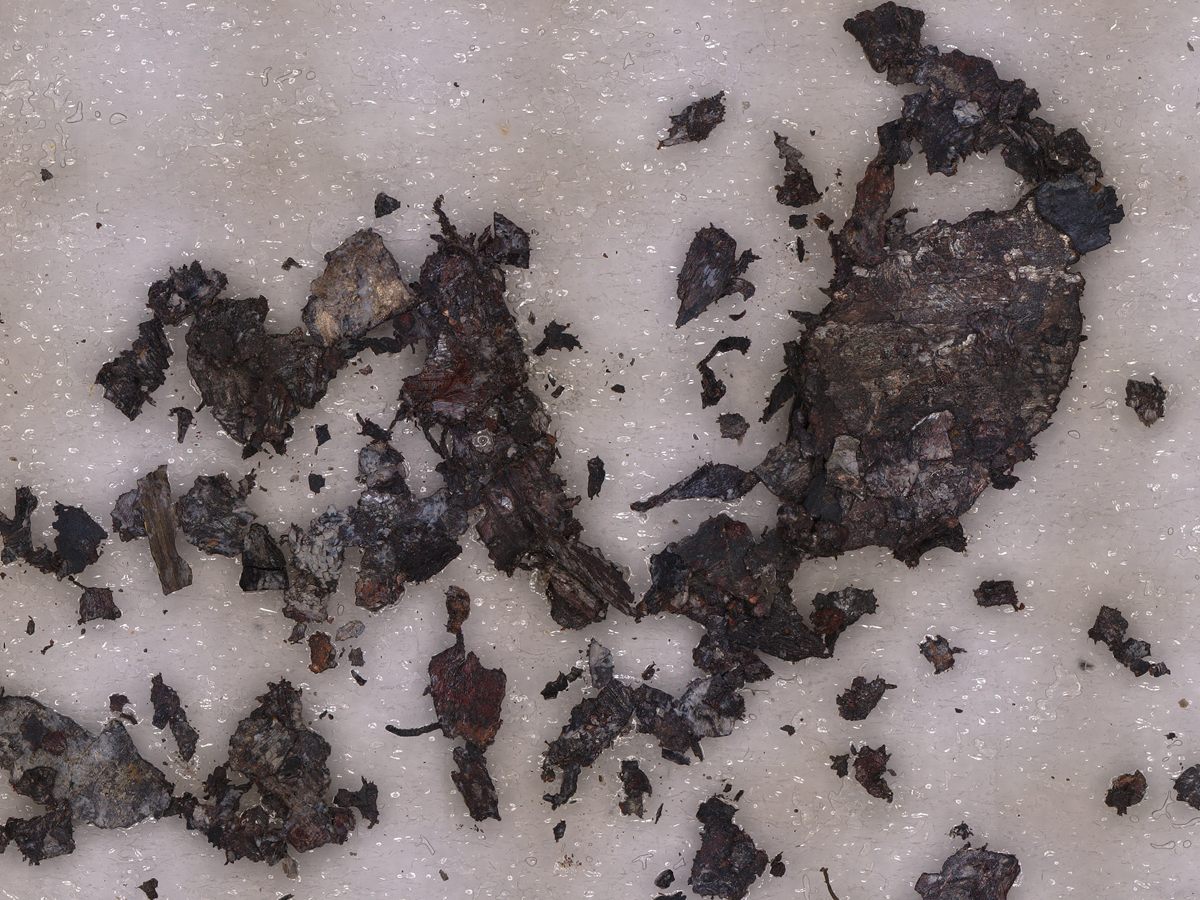
Particle morphology and composition from lubricant and surface debris.
Often ordered together
Failure Analysis
Root-cause investigation when wear debris points to an active failure mechanism.
View serviceSEM-EDS
High-magnification imaging and elemental micro-analysis of individual particles.
View serviceCoating Analysis
Assesses coatings whose breakdown can generate wear debris in a system.
View serviceFrequently asked questions
What does wear debris analysis tell you?
Whether debris comes from normal operation, abnormal wear, or an active failure mechanism such as fatigue, corrosion, or adhesion, along with the wear type, source, and severity.
What techniques do you use?
Scanning electron microscopy (SEM) with EDS elemental analysis, optical microscopy for particle imaging and counting, and particle morphology assessment to link shape to wear mode.
How does it prevent failures?
The size, shape, and composition of wear particles are a fingerprint of what is happening inside a machine. Reading them early flags a developing problem before it becomes a breakdown.
Can you trace debris back to a specific component?
Yes. In one case a single sample was resolved into debris from high-strength carbon-steel bolts, 6063-type aluminum, stainless-steel retainer rings, and X52 and X60 pipe, tracing each wear source to its origin.
What samples do you need?
Used oil, lubricant, or system-fluid samples containing the suspended wear particles; from these we characterize the particle population.
Catch wear before it becomes failure
Send us a fluid or lubricant sample and the equipment history. We will identify the wear type, source, and severity and recommend the proactive steps that protect your machinery.