

Fire & Explosion Damage Analysis
Detailed forensic analysis to determine the root cause of fire or explosion events, combining metallurgical evaluation, material degradation assessment, and contamination analysis to explain what happened and why.
Field / On-Site
Root-cause forensics
HAZ · residue · microstructure
Prevention · compliance
Fire and explosion damage analysis is a forensic, metallurgical investigation that determines the root cause of a fire or explosion, reading heat-affected zones, residue deposits, and material degradation to explain what happened and why.
What it is
PMI Specialists provides forensic analysis for fire and explosion incidents. Our experts conduct detailed forensic analysis to determine the root cause of fire or explosion events, including metallurgical evaluation, material degradation, and contamination assessment.
How we analyze it
The investigation draws on several technical approaches:
- Examination of microstructural changes and heat-affected zones
- Analysis of residue deposits to identify the failure sequence
- Assessment of whether damage stems from material defects, design issues, operational errors, or external factors
Case study: stainless steel pipeline fire
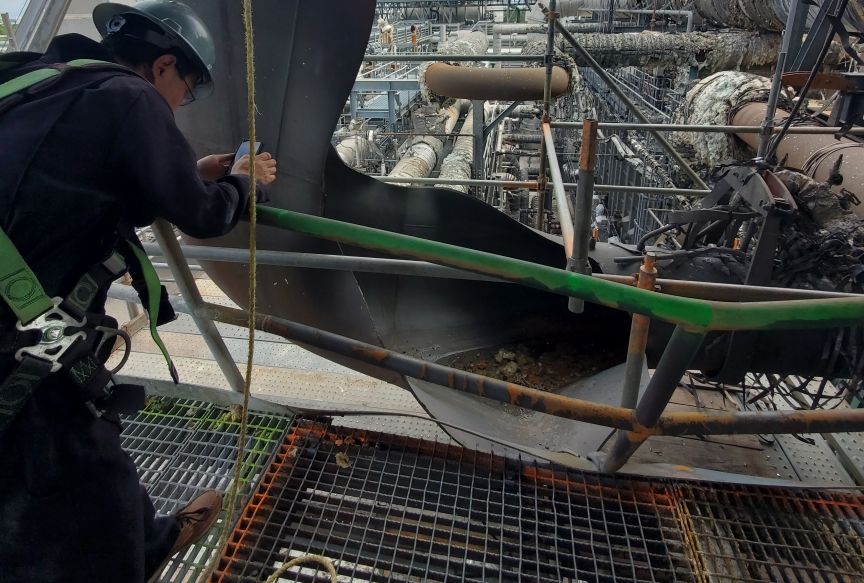
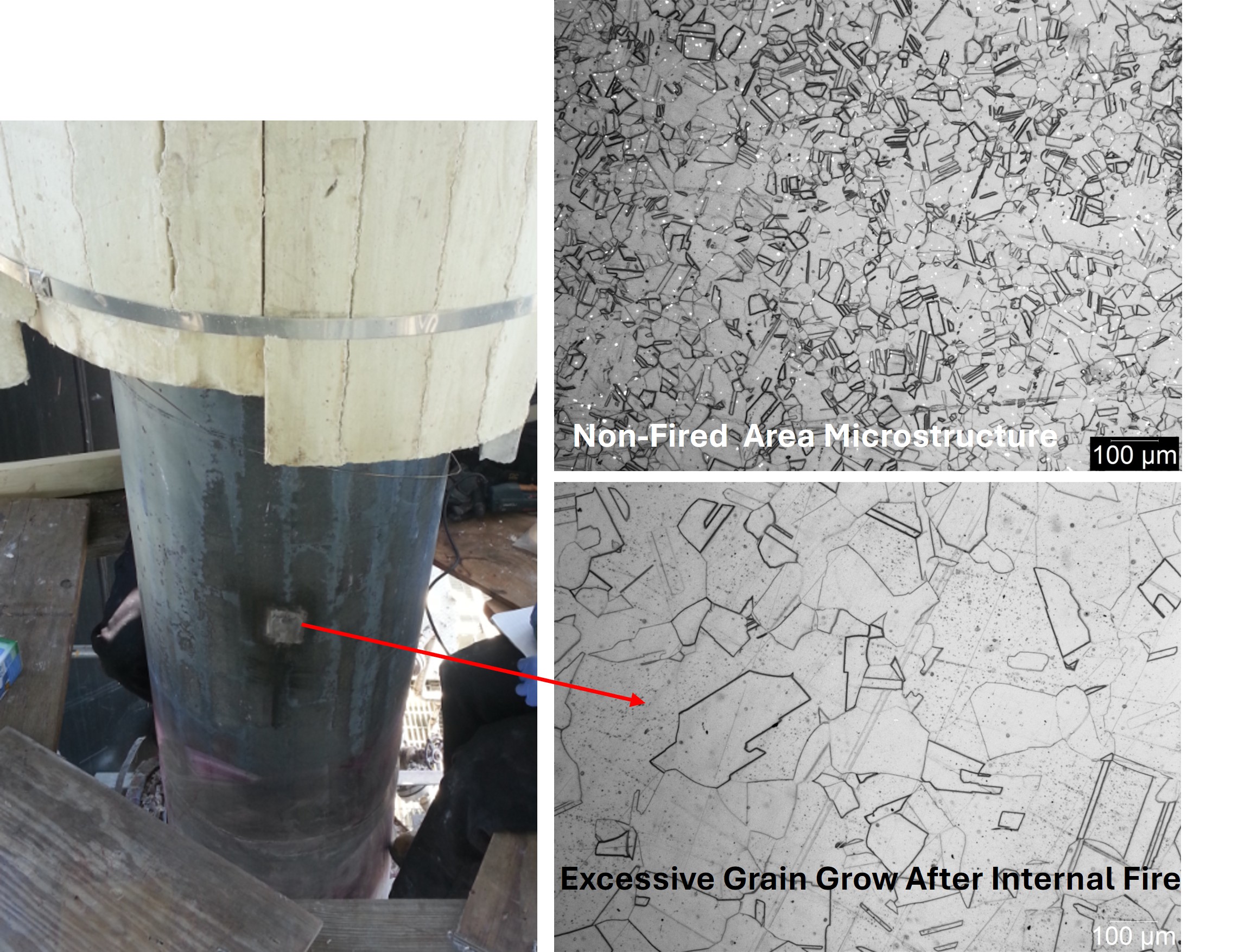
A 20″ 316L pipeline experienced internal combustion from low-flash-point vapors. The 8–15 minute fire reached temperatures exceeding 2350°F, causing grain coarsening and potential carburization. The analysis concluded that the affected section's fitness for service was compromised due to structural and corrosion concerns, with recommendations for selective component replacement.
Case study: natural gas compressor explosion
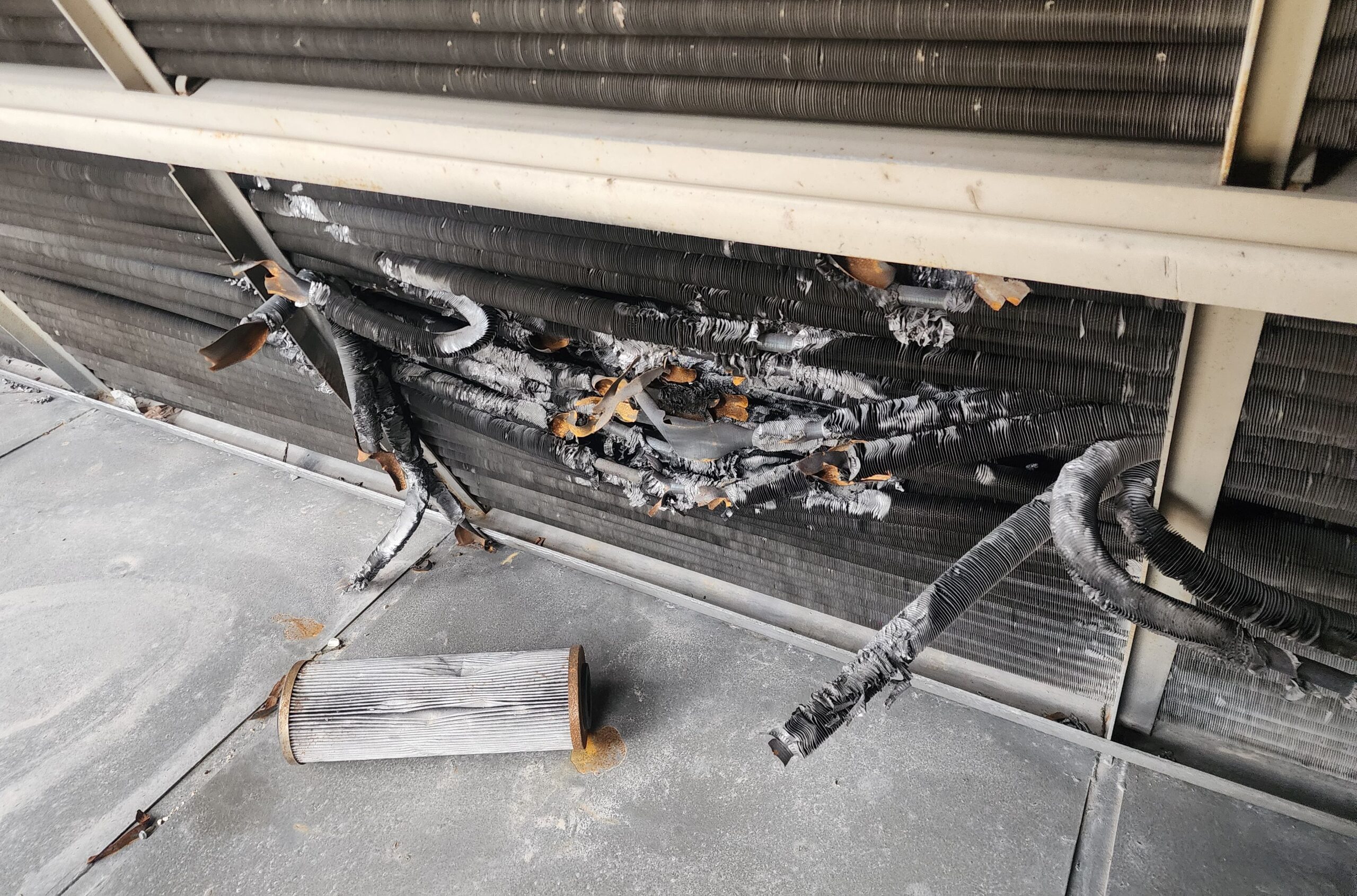
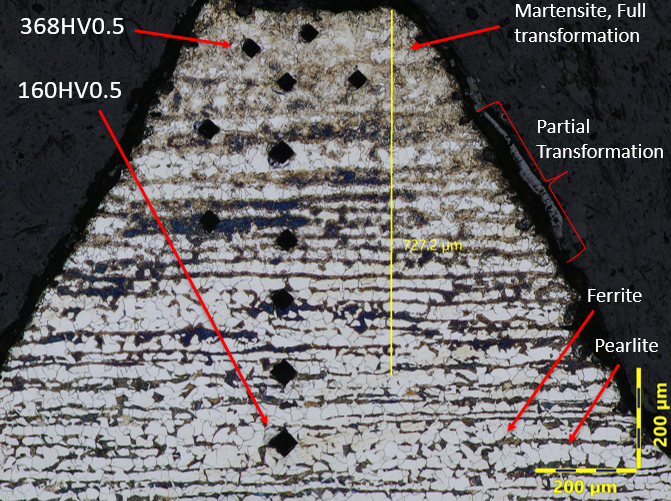
An internal explosion occurred during restart after 4,000 operating hours, caused by oil and air contamination. Metallurgical evidence revealed martensite formation indicating temperatures exceeding 1500°F. The analysis determined that while cooling tubes and plastic components required replacement, the bulk compressor assembly was largely unaffected.
Fire & explosion damage
Assessing heat and blast damage to plant equipment.
Often ordered together
Frequently asked questions
What does fire and explosion damage analysis determine?
The root cause and sequence of the event, by examining microstructural changes, heat-affected zones, and residue deposits, and by assessing whether damage came from material defects, design issues, operational errors, or external factors.
Can you tell how hot a fire got from the metal?
Yes. Microstructural evidence records peak temperature. In one case a pipeline fire that exceeded 2350°F was identified by grain coarsening and potential carburization; in another, martensite formation showed temperatures above 1500°F.
Can you tell whether damaged equipment is still fit for service?
Yes. Our analyses assess fitness for service and recommend whether components can remain in use or need selective replacement, based on structural and corrosion evidence.
Will your findings hold up for insurance or litigation?
Yes. Conclusions are tied to physical metallurgical evidence, supporting prevention, safety improvements, regulatory compliance, and defensible reporting.
Do you investigate on-site?
We combine on-site evidence collection with laboratory analysis. We are based near Houston, Texas and can deploy nationwide and internationally.
Need to understand a fire or explosion?
Send us the components and the incident details. Our metallurgists trace the evidence to a root cause and deliver findings that support prevention and compliance.